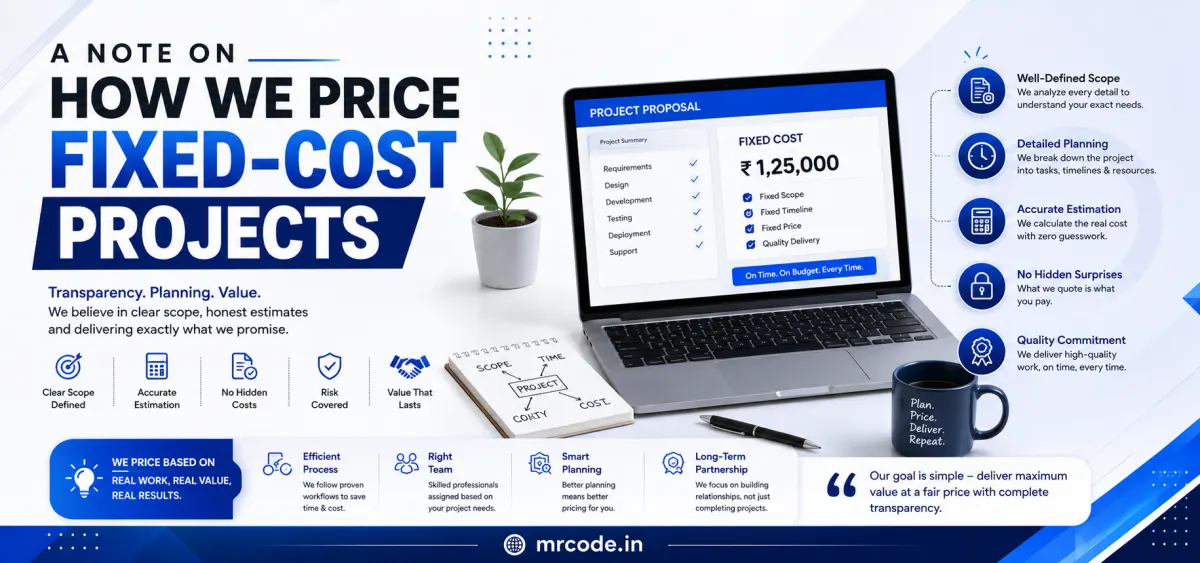
We quote most projects at a fixed price, which only works well if the pricing process behind that number is honest about risk and scope — otherwise a "fixed price" just becomes a fixed price that gets renegotiated the moment something unexpected comes up.
We price the scope, not a guess at hours
Rather than estimating hours and multiplying by a rate, we price based on the specific, agreed scope of what's being delivered. This is why scoping conversations happen before any number is given — the price is only as accurate as the scope it's based on.
We separate what's standard from what's custom in the pricing itself
Standard, well-understood work (a typical marketing site, a standard e-commerce setup) carries less pricing risk than genuinely custom functionality we haven't built a version of before. Custom work gets priced with that uncertainty accounted for honestly, rather than underquoting and hoping it works out.
What happens when a client wants to add scope mid-project
Additions beyond the agreed scope get priced separately and agreed before we build them, rather than silently absorbed (which leads to resentment on our side) or silently billed after the fact (which erodes trust on the client's side). Being upfront about this at the start avoids awkward conversations later.
Why we think fixed pricing benefits both sides
A well-scoped fixed price protects a client's budget from unpredictable overruns, and protects us from underestimating our own time. It only works, though, if both sides did the scoping work honestly at the start — which is really the actual point of everything described in this post.