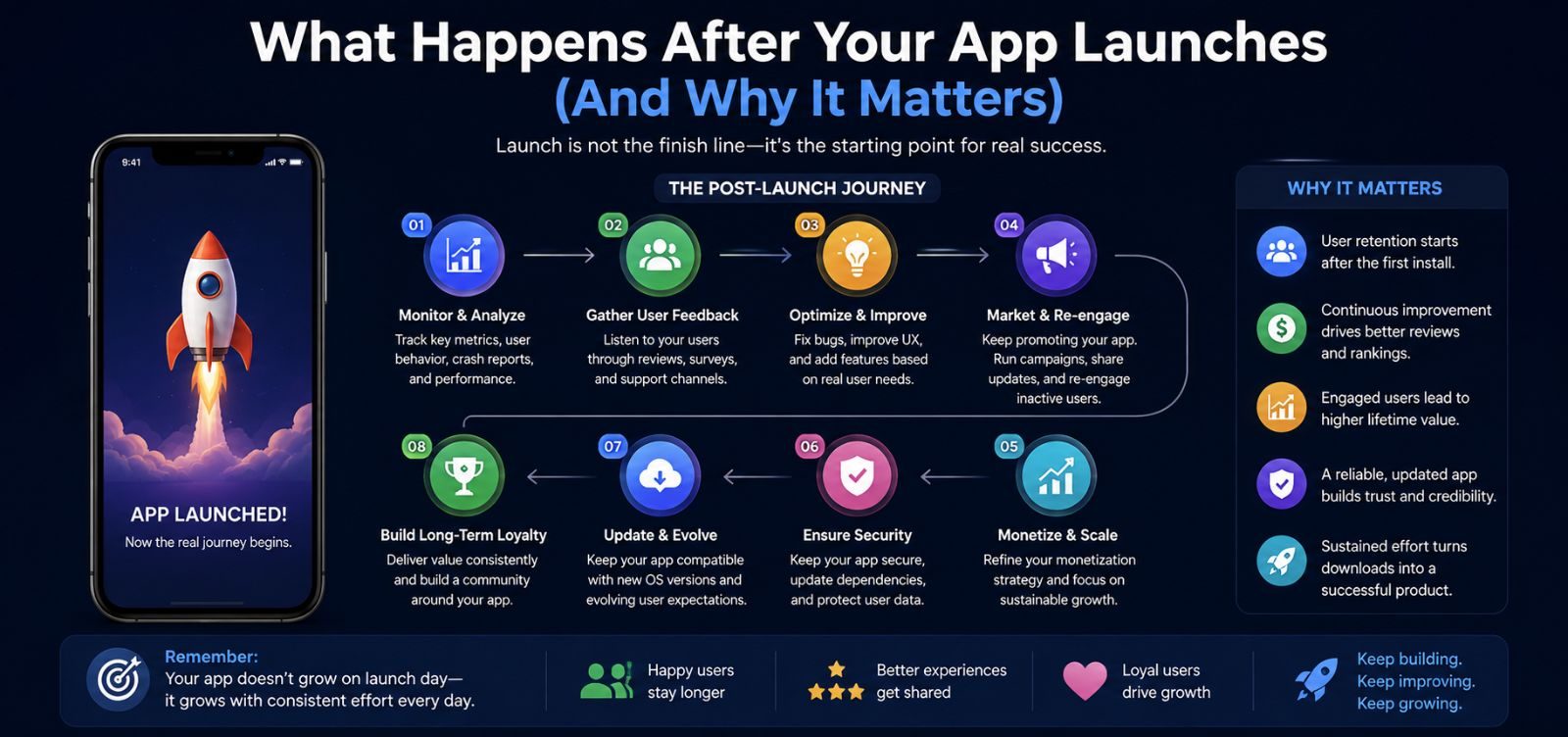
It's easy to think of "launch" as the finish line for a mobile app project, but for apps specifically, it's closer to the starting line for an entirely different phase of work: keeping it running as the platforms underneath it keep changing.
Operating systems don't stand still
Android and iOS both ship major version updates roughly once a year, plus smaller updates throughout. Each one can change how permissions work, deprecate an API your app relies on, or alter how the app store reviews submissions. An app that isn't maintained through these changes will gradually degrade — sometimes visibly, sometimes just becoming slightly broken in ways users notice before you do.
Store policies get stricter, not looser
Both Apple and Google have tightened privacy, data-handling, and content policies steadily over the past several years. An app that was compliant at launch can fall out of compliance purely because the rules changed, with no code changes on your end — which means someone needs to be watching for that.
Users expect updates, even small ones
An app that hasn't been updated in over a year reads, fairly or not, as abandoned — and app store algorithms factor recency into visibility too. Regular small updates (bug fixes, minor improvements) signal an actively maintained product, which matters both to users and to discoverability.
Why we build support plans in from the start
Because of all this, we treat post-launch support as part of the actual project scope, not an optional add-on we mention afterward. An app without a maintenance plan behind it is, realistically, an app with a shelf life measured in one or two OS release cycles.