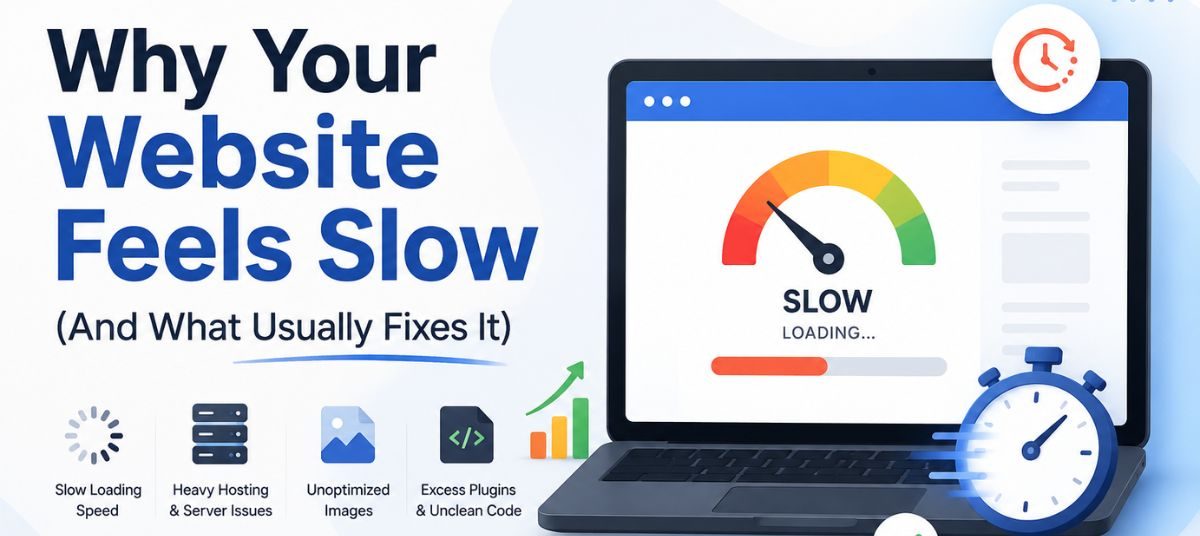
"Our website feels slow" is one of the most common things we hear from a business coming to us with an existing site. It's rarely one dramatic problem — it's usually two or three small ones stacked on top of each other. Here's the order we check things in, because it's also roughly the order of how much impact each one has.
1. Unoptimized images
This is the single most common cause we find. A product photo straight off a phone camera can be 4-8MB; a web page doesn't need anywhere near that resolution. Compressing images properly, and serving them in a modern format, routinely cuts page weight by 60-80% with no visible quality loss.
2. Too many third-party scripts
Every chat widget, tracking pixel, and embedded font you add is a request to someone else's server, on someone else's schedule. A handful of these are usually fine. A dozen of them, especially if a few are abandoned or misconfigured, will visibly slow a page down — and they're the easiest thing to accumulate over years without anyone auditing them.
3. Hosting that isn't matched to the site
A shared hosting plan built for a five-page brochure site will struggle once that same site grows a blog, a product catalog, and real traffic. This is usually the last thing we check, because it's often blamed first when it's rarely the actual bottleneck — most "slow hosting" complaints turn out to be unoptimized images or scripts once you actually measure it.
How to check it yourself
Before assuming the worst, run your own site through a free tool like Google PageSpeed Insights or GTmetrix. It'll usually tell you, in plain language, which of the three issues above is actually the bottleneck on your specific site — which is a much better starting point than guessing.